
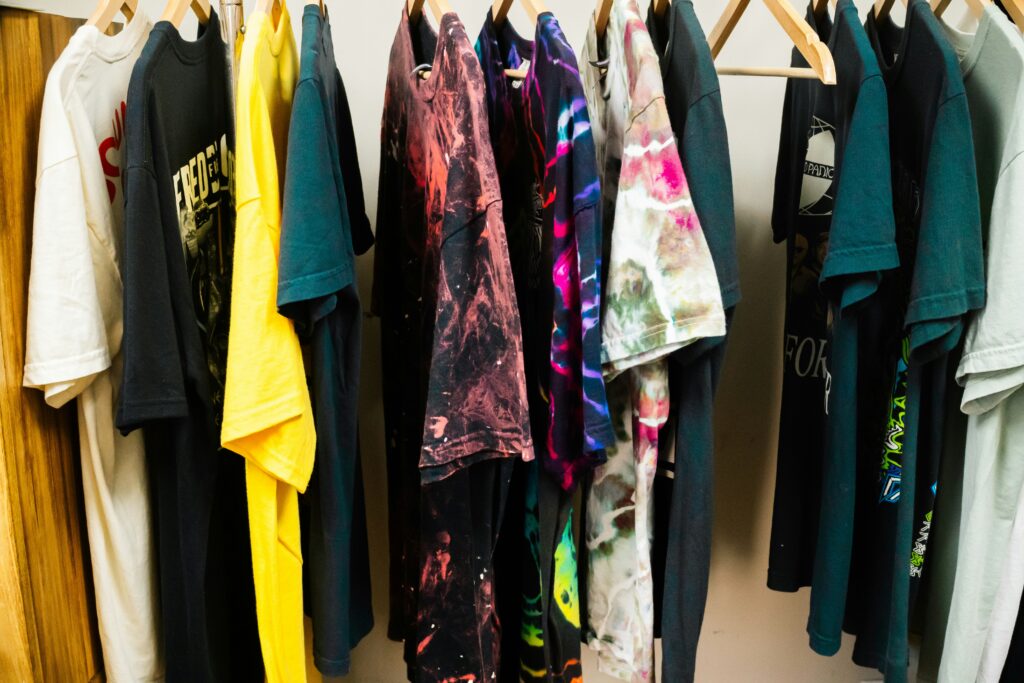
Clothing has always communicated something before you open your mouth. The colors you choose, the fit you prefer, the graphics you wear – all of it leaves an impression on anyone you pass. But for a long time, that expression was limited to what brands decided to make. You picked from what was on the shelf.
That’s changed. Custom t-shirt printing has moved from a niche service into something genuinely mainstream, and the reason isn’t just convenience. People want clothing that actually reflects who they are, not just what was trending last season. Whether it’s a design built around a personal joke, a cause you care about, or a specific aesthetic you can’t find anywhere else, custom printing hands that creative control back to the individual.
This isn’t a trend that peaked and faded. The numbers, the demand patterns, and the technology behind it all suggest this is how a growing number of people want to engage with clothing – as an extension of identity rather than a passive purchase.
Why People Are Choosing Custom T-Shirts
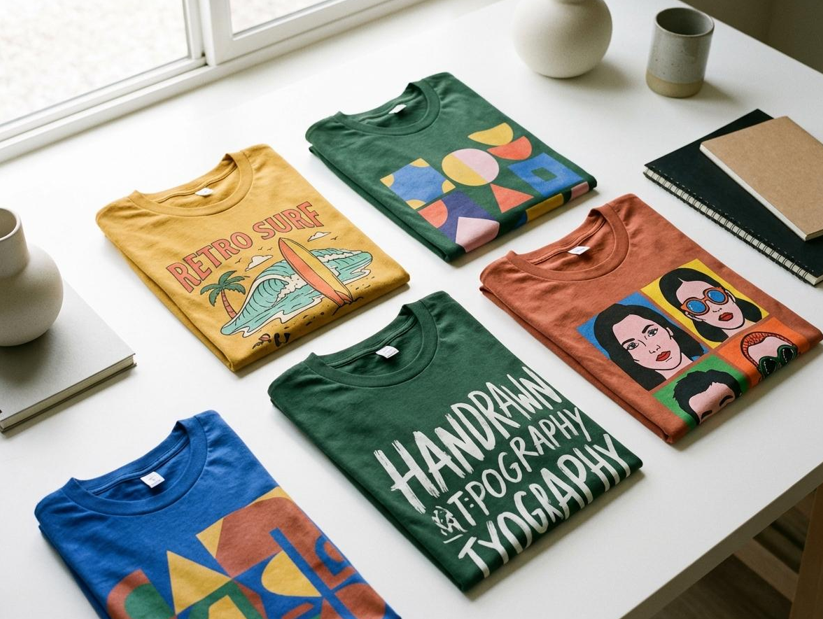
Custom t-shirts let wearers turn personal ideas and beliefs into wearable art
The shift toward personalized clothing reflects something real about how people think about style now. According to Business Research Insights’ 2025 market report, more than 55% of consumers prefer customized garments over mass-produced clothing, and 65% actively look for pieces that reflect their personal style and comfort. That’s not a small outlier group – that’s a majority of shoppers.
The market data backs it up. Grand View Research reported in November 2024 that the global custom t-shirt printing market was valued at USD 5.16 billion and is projected to reach USD 9.82 billion by 2030, growing at an annual rate of 11.5%. And the demand isn’t evenly distributed across age groups – Global Growth Insights’ 2025 data shows 72% of personalized apparel demand is driven by millennials, a cohort that has consistently prioritized individuality in purchasing decisions.
Professional t shirt printing services have made it genuinely easy to turn your own ideas into wearable pieces, whether you’re ordering a single shirt or a run of a hundred. The process is no longer reserved for businesses or event organizers. Anyone with a design concept – or even just a rough idea – can access it.
Part of the appeal is also about rejecting the alternative. Mass-produced clothing follows the same cycles, the same silhouettes, the same graphics. Custom printing sidesteps all of that.
How T-Shirt Printing Works: The Main Methods
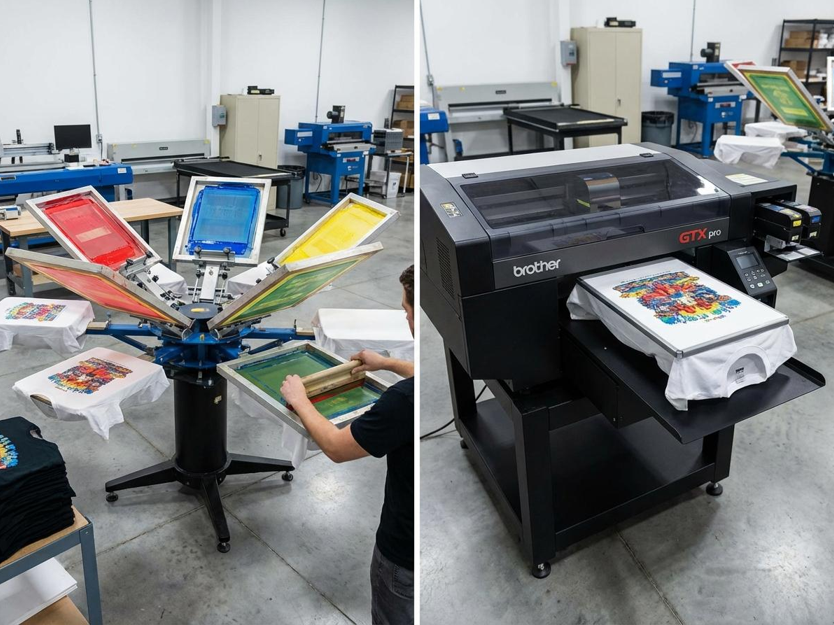
Screen printing excels at bulk orders, while DTG printing handles single custom pieces with sharp detail
Knowing the difference between printing methods helps you get the result you actually want. Each has its strengths, and picking the wrong one for your design or order size is one of the most common ways people end up disappointed.
- Screen printing is the oldest commercial method and still the most widely used. It pushes ink through a mesh screen onto the fabric, producing vivid, durable results. Grand View Research’s 2024 market analysis shows screen printing holds 53.9% of the custom t-shirt market share. It’s best for bold, simple designs in large quantities – the setup involves creating a separate screen for each color, so it becomes cost-effective when the per-unit cost is spread across many shirts.
- Direct-to-garment (DTG) printing works more like an inkjet printer, applying ink directly onto the fabric. It handles complex, photographic, and full-color designs better than any other method. It’s the go-to for small orders and one-off pieces. According to Straits Research’s 2024 custom t-shirt printing market report, the DTG segment is growing at 11.2% CAGR through 2031, partly because it doesn’t require minimums and suits the kind of hyper-personal designs individuals want.
- Heat transfer and vinyl cutting round out the common options. These are accessible for names, numbers, and simple graphics – popular for sports jerseys and small runs where a professional screen printing setup isn’t practical.
If you’re ordering a single shirt with a detailed personal design, DTG is your best option. If you’re ordering 50 matching shirts for an event, screen printing will give you a better result at a better price. That distinction alone can save you time and frustration.
Choosing the Right Custom Piece for Your Style
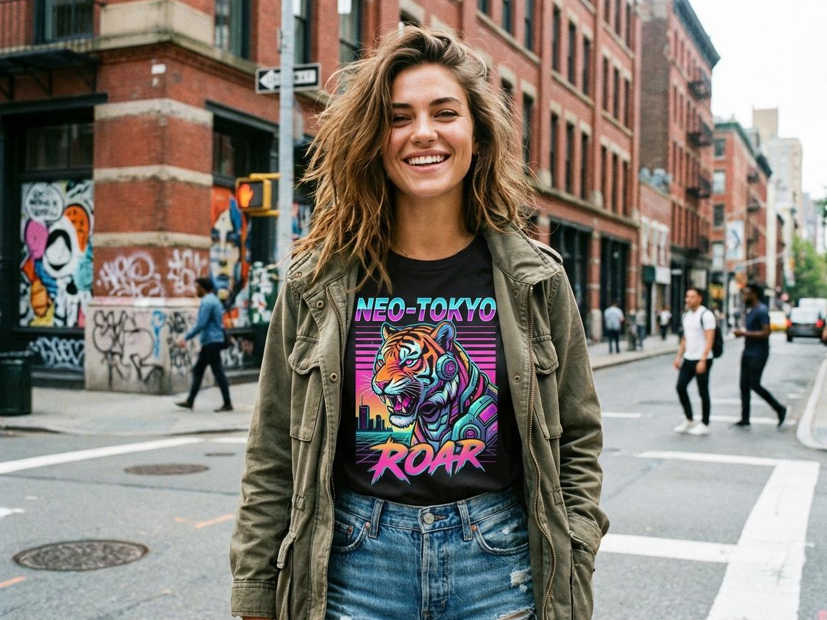
A well-chosen custom piece communicates personality before you say a word
You don’t need to be a designer to order custom clothing. Most modern printing services offer design tools, templates, and mockup previews that let you work with a phrase, a photo, a logo, or just a basic idea and build from there.
The print method should match your aesthetic. Minimalist text or clean line art works beautifully with vinyl cutting – the edges are crisp, and the result looks intentional. Bold, saturated graphics in multiple colors are where screen printing shines. Photographic or gradient-heavy designs need DTG to render properly.
Color base matters more than most people realize. According to Printify’s 2025 data on print-on-demand consumer preferences, black and navy remain the dominant base colors globally – and for good reason. Dark backgrounds make graphic details pop without competing for attention, and they hold up better through repeated washing.
Fabric quality also affects how the design reads over time. A 100% cotton tee absorbs DTG ink well and washes predictably. Cotton-polyester blends are more durable for screen printing and resist shrinkage. If you want the design to last as long as the shirt itself, fabric choice isn’t a detail to skip.
Personal style is cumulative. Just as choices like half sleeve tattoo ideas for women communicate something lasting about your identity, custom clothing gives you a rotating canvas for that same expression – one that can shift with your mood, your message, or the season.
The Personal and Emotional Side of Custom Clothing
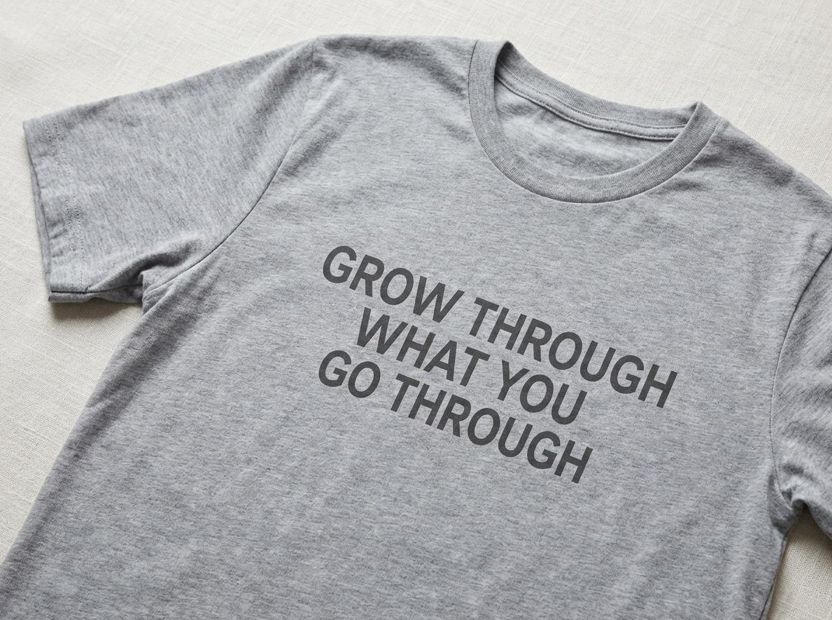
Custom designs carry personal meaning – from inside jokes to cultural statements
There’s a well-documented psychological concept called “enclothed cognition” – the idea that what you wear affects how you think and feel about yourself. When your clothing aligns with your identity rather than just covering you, there’s a measurable effect on confidence and focus. Custom clothing takes that one step further: you didn’t just choose it, you made it.
A 2024 Deloitte survey found that 1 in 5 consumers is willing to pay a 20% premium for personalized products. That willingness isn’t irrational – people recognize the difference between something generic and something built for them. Custom shirts hold memory and meaning in a way that off-the-rack pieces don’t. An event shirt from a trip you took with close friends, a tribute design for someone you’ve lost, a graphic that captures exactly what you stand for – these aren’t just clothing, they’re objects.
Printful’s data on print-on-demand statistics consistently shows apparel as the number one category in the entire POD market. The apparel segment accounted for 39.5% of the global print-on-demand market in 2025, according to Grand View Research’s print-on-demand report. That dominance is driven by exactly this: the emotional value of personal clothing is higher than almost any other customized product.
Self-expression through clothing is part of the same identity-building process as grooming, style choices, and how you carry yourself. Like a well-chosen short sides long top haircut, a custom t-shirt signals how you’ve decided to present yourself – not just what was available.
Custom Apparel for Groups, Events, and Gifting
Custom shirts aren’t only a solo exercise. Some of the best uses are collective ones – matching shirts for a bachelorette trip, a family reunion, a sports team, or a workplace event. The commercial and group segments held 56% of the custom t-shirt market in 2024, per Grand View Research, and the online ordering channel is growing fastest, at a 13.3% CAGR through 2030. Online tools have made coordinating group orders genuinely manageable, even across different cities.
As gifts, custom shirts land differently than generic options. They’re personal, functional, and they last. A shirt designed around an inside joke, a shared experience, or someone’s specific interest will get worn in a way that a gift card never could.
Modern tools – from beauty tools and gadgets to online custom design platforms – are making personal expression more accessible across every category. The same shift that brought professional skincare tools into home routines has brought professional-grade printing within reach of anyone with an idea and a laptop.
What to Look for When Ordering
Not all custom printing services deliver the same quality, and a few simple checks before you commit will save you from a bad result.
Ask about ink type. Water-based inks are more eco-friendly, gentler on skin, and tend to feel softer on the finished shirt. Plastisol inks are more common in screen printing and are more durable for heavy graphics. Neither is universally better – it depends on the design and the fabric.
Turnaround time varies by method. DTG orders can be turned around in under 24 hours. Screen printing needs time to set up screens for each color in your design, so allow more lead time, especially for complex work. If you’re ordering for a specific event, build buffer time into your schedule.
Check whether there are minimum order quantities. Print-on-demand platforms and DTG-focused services often print single items. Screen printing setups typically have minimums because the fixed costs need to be distributed. Straits Research’s custom t-shirt market analysis notes that growing on-demand capabilities are pushing minimums down across the industry, which is good news for individual buyers.
Finally, ask for a digital mockup before production. Any reputable service will provide one. It’s your last chance to catch color issues, spacing problems, or design errors before the shirt is made. Don’t skip that step.
Wear What You Mean
Custom t-shirt printing has earned its place as a genuine tool for self-expression – not a novelty, not just a business solution. The technology is better than it’s ever been, the access is easier than it’s ever been, and the cultural permission to care about what your clothing says has never been higher.
Whether you’re ordering one shirt that captures something specific about who you are, or a batch for a group that shares something real, custom printing gives you a direct line between your inner world and what you put on your back. That’s worth something.