
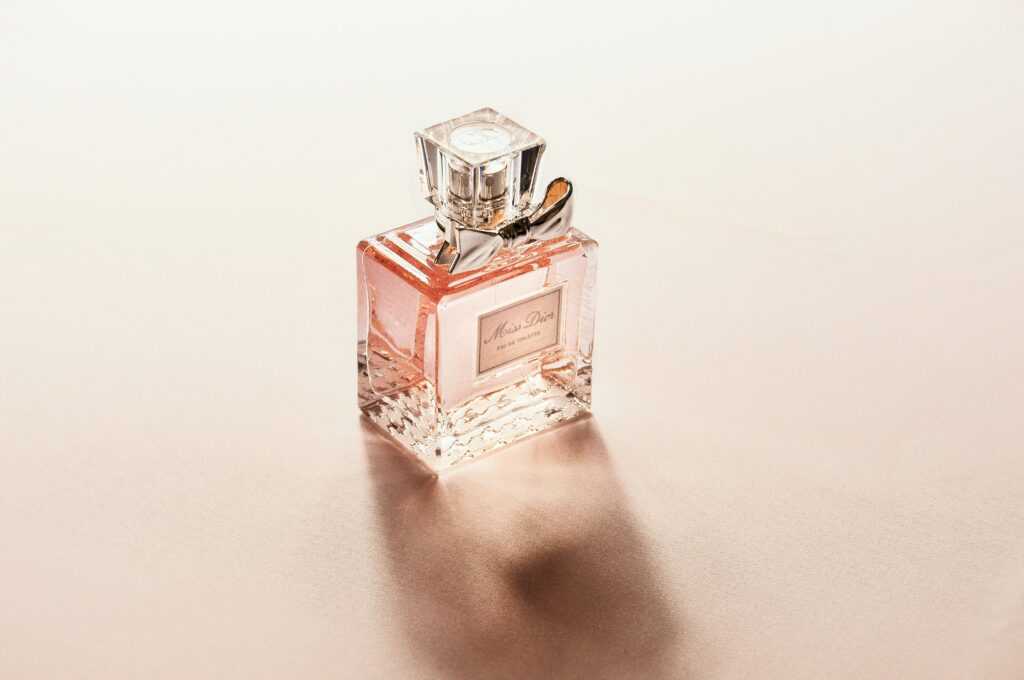
There is a moment in the morning, after the dress is on, the shoes are chosen, and the earrings are in, when a woman is almost ready to leave but not quite. Something is missing, and it is not something visible. The outfit is complete. The mirror confirms it. But the woman does not yet feel finished, and the difference between looking ready and feeling ready is often the thing she has not yet put on her skin. We develop women’s perfume for women who recognize this moment, because we think of fragrance as the final layer of getting dressed rather than as something separate from the outfit entirely.
Most women treat fragrance as an afterthought. They spray perfume the way they grab their keys, as the last thing before the door, without connecting it to the decisions they have already made about what to wear. The dress was chosen with intention. The shoes were considered. The earrings were deliberate. And then the perfume goes on automatically, the same scent applied the same way regardless of what the rest of the outfit is doing. The scent and the clothes live in separate rooms of the same morning, and they never meet.
The women we know who feel most finished when they leave the house are the ones who have closed that gap. They think about fragrance the way they think about a shoe or a ring, as a choice that relates to the outfit rather than one that runs parallel to it. The result is a woman who feels complete in a way she can sense but may not be able to name, and the people around her sense it too, without knowing that the thing they are responding to is a scent that was chosen with the same care as the dress.
Why fragrance finishes what the mirror cannot
A mirror shows you what you look like. It does not show you what you feel like, and it does not show you what other people will experience when they are near you. A woman can look perfect in the mirror and still feel unfinished, because the mirror is missing a dimension that only fragrance can add.
That dimension is presence. A woman wearing a scent that she chose with intention carries herself differently from a woman wearing nothing at all or a woman wearing something she sprayed without thinking. The scent adds a layer of self-awareness that changes how she moves through a room, how she holds a conversation, and how she feels when someone leans in close. It is the part of getting dressed that is invisible to the eye and unmistakable to the person standing next to her.
This is why we think of fragrance as part of dressing rather than as a beauty product applied after dressing. The shoe completes the outfit visually. The earring completes the decor. The fragrance completes it sensorially, in a dimension the mirror cannot reach, and the woman who has all three working together feels it in a way that registers as confidence even if she never articulates what changed.
How the outfit should inform the scent
The women who layer fragrance most effectively tend to consider the weight of their scent relative to the weight of their outfit. A heavy silk gown and a light citrus perfume create a mismatch because the dress’s visual weight overpowers the scent’s sensory weight. A cotton sundress and a dense oud create the opposite problem, because the scent is heavier than anything else the woman is wearing, and it dominates the impression.
The principle is simple. A lighter outfit wants a lighter scent. A heavier outfit can support a heavier scent. A printed dress, which is already doing visual work, wants a scent that sits quieter and lets the print lead. A solid-coloured dress, which does less visual work, can accommodate a more prominent scent because the fragrance is not competing with a pattern.
This does not mean a woman needs multiple perfumes for multiple outfits. It means she should consider how much of her scent she applies relative to what she is wearing. Two sprays of the same eau de parfum will read differently under a silk slip than under a heavy knit, and the woman who adjusts her application to the outfit will smell more considered than the woman who applies the same amount regardless of context.
The invisible accessory
We talk about jewelry and shoes and bags as accessories because they complete an outfit. Fragrance does the same thing, but it does it in a way none of the visible accessories can, because it occupies a different sense. A woman in a beautiful dress with the right shoes and the right bag has completed the visual composition. A woman in the same outfit who has also chosen her scent with the same care has completed the sensory one, and the total impression is fuller even though nothing visible has changed.
The women who understand this tend to discover it by accident. They put on a perfume one morning that happened to match the mood of what they were wearing, and the day felt different. They felt more themselves, more present, more like the outfit was doing what they wanted it to do. And then they started doing it on purpose, choosing the scent at the same time as the shoes, and the shift from accidental to intentional changed how they felt every morning afterwards.
The last thing before the door
The order of getting dressed matters, and fragrance belongs at the end of it, after the outfit is on and the accessories are chosen. Not because it is the least important, but because it is the layer that responds to everything that came before it. A woman who chooses her scent before her outfit is working blind. A woman who chooses it afterwards has the full picture, and the scent she applies completes it.
The gesture itself takes three seconds. A spray on the wrist, a touch to the neck, and the morning is finished. The woman who walks out the door with that final layer on her skin is not wearing more than the woman who skipped it. She is wearing the same amount of clothing and the same number of accessories. But she is carrying something the other woman is not: the feeling of being fully dressed, in a way that people around her will notice even if they never see the source.
Our fragrance collection was made for this moment. We will share more as the launch approaches.